Progress you can measure

DRI conducts the research. DRIF funds it. DRIF is the fundraising foundation that supports DRI’s cure-focused research.

MILESTONES

Decades of measurable momentum

DRI’s principal research initiatives are the DRI BioHub and islet cell transplantation. The Diabetes Research Institute is a Center of Excellence at the University of Miami Miller School of Medicine and leads the Diabetes Research Institute Federation — a global alliance of collaborating research centers.

1971

Diabetes Research Institute Foundation is founded

Parents of children with type 1 diabetes founded the Diabetes Research Institute Foundation to fund the search for a cure.

1990

Organ transplant patients become insulin independent after receiving islets

After surgery to remove their pancreas, patients received donor islets along with organ transplants. Some produced enough insulin to stop taking injections.

2003

Shanghai and DRI teams collaborate on an islet transplant

At Shanghai’s First People’s Hospital, local clinicians and DRI specialists worked together to isolate donor islets and transplant them into a patient.

2012

Kidney transplant trial tests an alternative to one anti-rejection drug

Researchers tested whether patients’ own stem cells could replace a drug given at the time of a kidney transplant. Participants continued taking other anti-rejection medicines.

2015

An islet transplant milestone

In the DRI’s first BioHub pilot trial, a participant with type 1 diabetes was able to stop insulin injections after receiving donor islets.

2019

Long-term islet transplant recipients show near-normal glucose control

A small group of islet recipients had lived without insulin injections for an average of ten years. Glucose monitors showed blood sugar patterns close to those of people without type 1 diabetes.

2020

Long-term culture of human pancreatic slices reveals regeneration of insulin-producing cells

Researchers kept thin slices of donated human pancreas alive in the lab. They could watch new insulin-producing cells develop within the tissue over time.

SPOTLIGHT

Breakthroughs in focus

How do new insulin-producing cells form? Can changes in metabolism reveal when diabetes begins? These studies show how DRI scientists investigate questions about cells and the immune system.

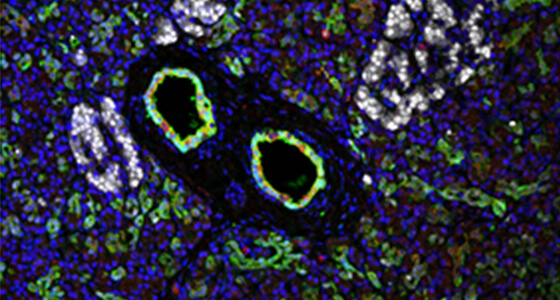
Fluorescence microscopy image of pancreatic tissue with blue, green and white staining.

DRI scientists show that pancreatic progenitors reside within large ducts of the human pancreas

In human pancreatic ducts, researchers identified cells that could mature into insulin-producing beta cells in the lab.
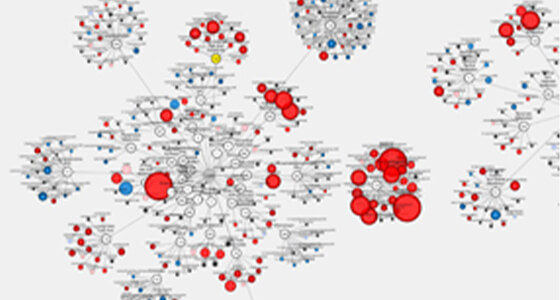
Network diagram of connected data points with selected clusters highlighted in red.

Possible early signs of type 1 diabetes in mice

In mice, researchers tracked changes in metabolism as type 1 diabetes developed. Those patterns offer clues to possible early markers of the disease.
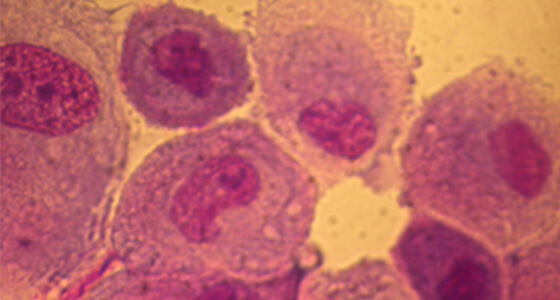
Microscope image of pink-stained cells with purple nuclei.

COVID-19, diabetes and mesenchymal stem cells: groundbreaking findings bring new hope

Building on diabetes research into how stem cells affect inflammation, a DRI team studied these cells in a small trial involving people with severe COVID-19 lung injury.
TRANSLATION

From the lab to real lives

Replacing insulin-producing cells raises a second question: how can those cells survive after a transplant? DRI teams study both challenges and work with partner centers to bring promising approaches into clinical trials.

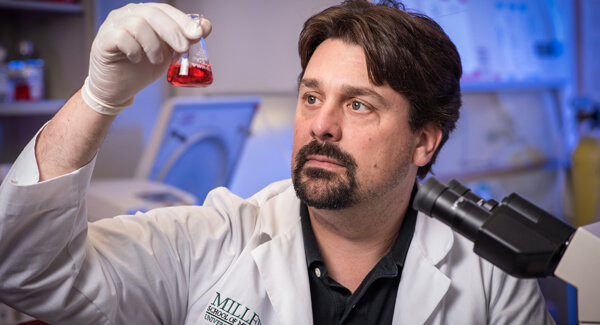
A researcher examining a flask of red liquid beside a microscope.

Keep the momentum going

DRIF is the fundraising foundation that supports DRI’s cure-focused research.